
The Next Advertising Frontier: Why Brands Must Become AI-Discoverable Before Their Competitors Do
More people now ask AI assistants for recommendations as well as using search engines. This article explains how to find out how your brand is described there, and what is and is not within your control.
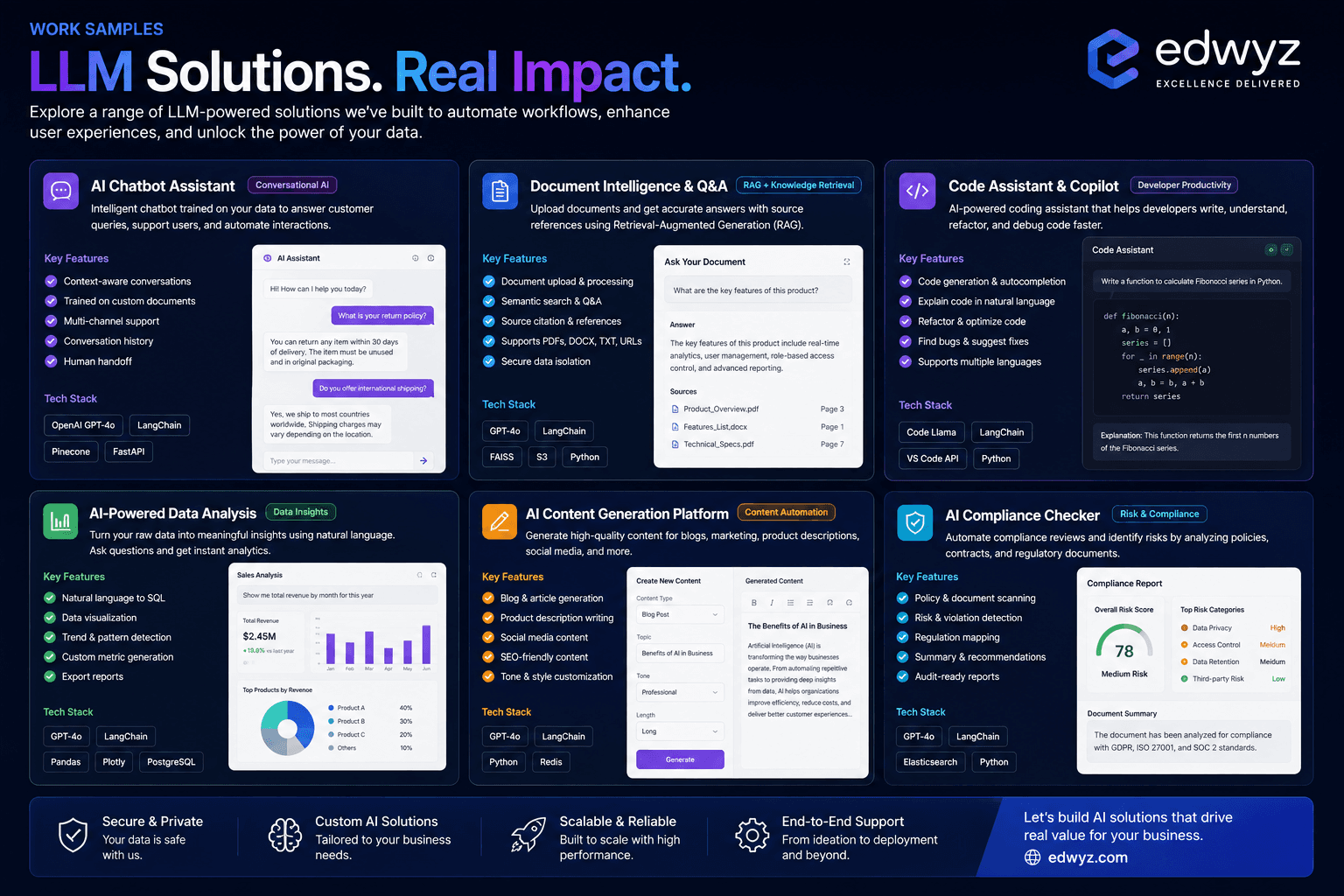
In 2010, brands fought for the top position on Google's first page. In 2016, they fought for space in Instagram's algorithmic feed. In 2026, the fight is for something entirely new — and most marketing teams haven't noticed it yet. The battlefield has moved inside the AI.
Tanishq has reportedly become the first jewelry brand in India to run paid advertising inside ChatGPT, according to trade coverage in Storyboard18 and Indian Jeweller. Neither report is a performance study, so this is evidence that the channel exists, not that it works. For a brand in a considered-purchase category it is still a useful signal about where buying research is heading.
How Intent Evolved Across Three Eras of Digital Advertising
Google's model was built on declared intent. You typed what you wanted. The mechanic was elegant: connect the searcher with the answer, monetise the space between. Fifteen years of search advertising trained brands to think in keywords.
Instagram's model was built on predicted intent. You didn't know you wanted to redecorate your living room — until Instagram showed you a sofa that made you feel something. The mechanic was subtler: surface desire before it crystallises into a query. A decade of social advertising trained brands to think in audiences and creative.
AI assistants represent a third era: answered intent. You're not searching for 'best wedding jewellery India' — you're asking 'what jewelry should I buy for my wedding?' and receiving a specific, personalised recommendation. The distinction is enormous for brands. A searcher is browsing. A person asking an AI for a recommendation has already decided to decide.
Someone asking ChatGPT for a recommendation has moved past awareness and consideration — they're in active decision mode. That is the highest-quality moment in the entire buying journey. Traditional media can't reliably reach this person at this exact moment. AI can.
The Tanishq Signal — What India's First ChatGPT Ad Actually Means
The Tanishq campaign matters less as a media buy and more as an inflection point. It confirms that AI platforms are open for brand investment, that premium consumer brands see the intent quality as worth the spend, and that the audience asking ChatGPT 'what wedding jewelry should I buy?' is real, large, and commercially valuable.
The question Tanishq's marketing team understood — and most brands haven't asked yet — is simple: when my potential customer turns to AI for a buying decision in my category, is my brand the answer? If you haven't run that test, you almost certainly don't know. And in the majority of categories, the honest answer is: you don't appear at all.
This is not a distant problem. AI assistants and AI-generated answers are already part of how some people research purchases, and many teams have never checked how their own brand appears in them. We have no reliable figures for how large that shift is in your market, so measure it for your own category rather than relying on headline statistics.
Three Distinct Layers of AI Brand Visibility
AI brand visibility is not a single discipline — it's three overlapping capabilities, each requiring a different strategy and a different type of expertise.
Layer 1: Organic AI Citation
This is your brand being mentioned unprompted when AI answers questions in your category. If someone asks 'what are the best AI engineering companies in India?' and ChatGPT, Claude, or Perplexity doesn't mention you, you have an organic visibility gap. Closing it requires structuring your public content so that LLMs — which learn from and retrieve from the web — have accurate, authoritative, consistent information about what you do, who you serve, and what results you deliver.
Layer 2: AI-Native Advertising
This is paid placement inside AI platforms: the equivalent of search advertising, but within AI answers. These products are new, are changing quickly and are not available in every market, so check what each platform currently offers before planning around it. Where they are available, they can put a message in front of someone at a moment of high intent.
Layer 3: Brand Accuracy in AI Outputs
This is the underrated layer. What happens when someone asks ChatGPT to 'compare [your brand] vs [competitor]'? Is the description accurate? Does it reflect your current positioning, pricing, and capabilities — or is it derived from outdated web content that no longer represents you? AI models learn from public information, and if your public information is thin, inconsistent, or old, the AI's representation of your brand will be too. Brand accuracy monitoring is the discipline of auditing what AI says about you, systematically and regularly, and actively shaping it.
The AEO Framework — Engineering AI Visibility
Answer Engine Optimisation (AEO) is the emerging discipline of structuring your content, data, and brand presence so that AI systems cite, reference, and recommend you when answering relevant questions. It builds on traditional SEO, and for Google's own AI features Google says the fundamentals are the same as for search: helpful, original, well-structured content. Other assistants retrieve and cite sources differently, which is where the extra work sits.
Where Google crawls and indexes web pages to find keyword relevance, AI models learn from the entire web and reason about brand authority, content depth, and conceptual consistency. A brand with ten authoritative, well-structured pieces of content that directly answer questions in its category will outperform a brand with five hundred thin blog posts. Quality, clarity, semantic structure, and factual density matter more than volume.
A rigorous AEO framework operates across four dimensions. Authority: are you consistently cited across the web as a credible source in your category? Structure: is your content formatted in ways that AI can parse, extract, and reason about — not just humans? Freshness: does your public content reflect your current capabilities, not your 2022 positioning? Coverage: do you have authoritative, substantive content for every question your ideal customer might ask an AI when evaluating solutions in your category?
What Google says: optimising for generative AI features in Google Search is still SEO. Google's guidance does not require special markup, an llms.txt file or rewriting content into small chunks. Unique, expert, helpful content is what matters. The extra tactics in this article matter mainly for other assistants and for measuring how your brand is described.
What 'Structured for AI' Actually Means in Practice
Most marketers hear 'structured content' and think about meta tags and alt text — SEO basics they've been running for a decade. AEO requires something more sophisticated: semantic structure that helps AI understand not just what your page says, but what your brand does, for whom, in what context, and why it's the right answer to a specific question.
Practically, this means Schema.org markup that describes your organisation, services, and offerings in machine-readable terms. It means FAQ content that directly answers the questions your customers ask AI — not keyword-stuffed, but genuinely comprehensive and authoritative. It means entity consistency: your company name, description, service categories, and core differentiators stated the same way across every public touchpoint, so that LLMs build a coherent, stable representation of who you are.
It also means RAG-ready documentation: content so clearly structured and logically organised that a retrieval system would surface it — and rank it highly — in response to a relevant query. This is a content architecture problem as much as an SEO problem, and it requires thinking about how AI retrieval systems score relevance, not just how Google's PageRank algorithm does.
Why LLM Engineering Knowledge Changes the Outcome
What separates a serious AEO practice from a rebranded SEO service is understanding how large language models retrieve and describe information. A content agency can write AEO-optimised articles. Teams with experience of RAG pipelines and LLM development are better placed to explain why a brand appears in some answers and not others, and to design a repeatable way of measuring it.
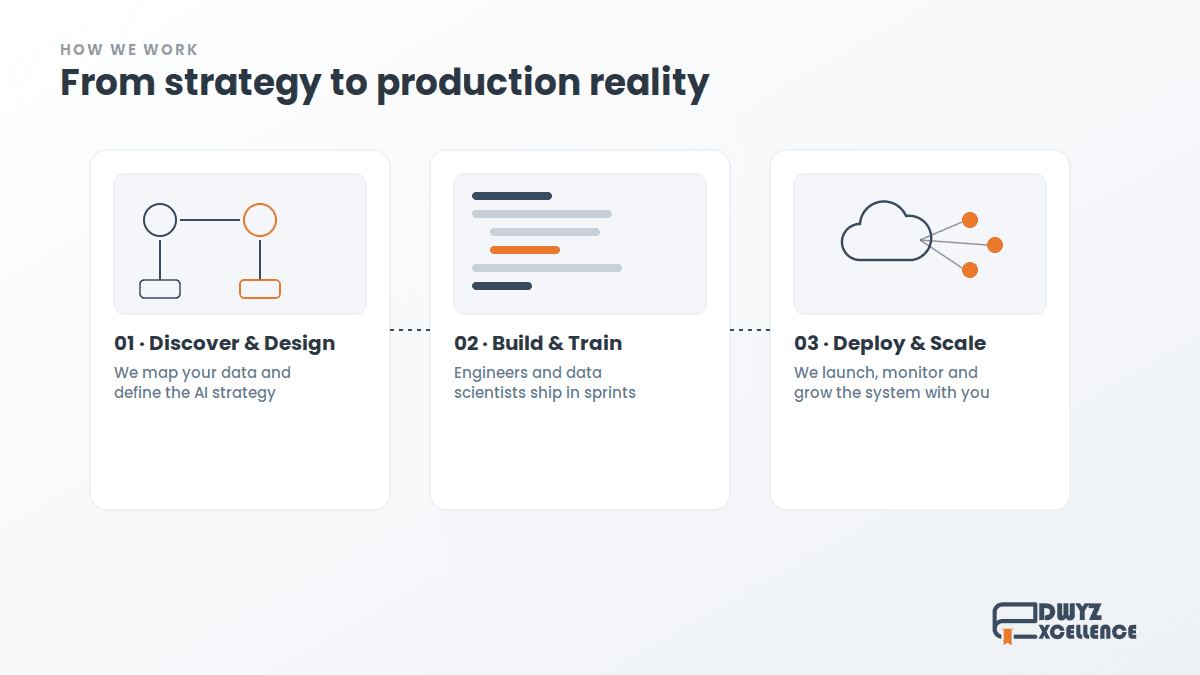
The measurement layer is especially important, and it is where many early efforts fail. Ranking on Google is trackable: keyword positions, impressions and click-through rates. For AI assistants there is no equivalent of Search Console. What you can do is ask a fixed set of questions across assistants on a schedule and record the answers. Answers vary from run to run, so read the results as a trend, not a score.
Your 90-Day Action Plan for AI Visibility
You don't need a six-month strategy project or a large budget to start building AI visibility. The first 90 days should be focused on understanding your baseline, fixing the most obvious gaps, and placing your first AI-native experiments.
Days 1–30: Audit Your AI Baseline
Run a structured query audit across ChatGPT, Perplexity, and Gemini. Ask the exact questions your customers would ask when evaluating solutions in your category — 'what are the best [category] companies in [market]?', 'who should I use for [specific need]?', 'compare [you] vs [competitor]'. Document where you appear, where you don't, what your competitors' AI presence looks like, and what the AI says about you when it does mention you. This baseline is your starting point. It will surprise you.
Days 31–60: Restructure Your Content for AI
Identify the top 10 questions customers ask AI in your category. For each one, create a dedicated, authoritative, comprehensive piece of content that directly addresses it — not keyword-optimised, but genuinely the best answer available on the internet for that question. Add Schema.org markup to your service pages, organisation pages, and FAQ sections. Audit your Google Business Profile, LinkedIn company page, and any third-party profile pages for accuracy and consistency. Close the entity consistency gaps.
Days 61–90: Test AI-Native Channels
Where paid placement on AI platforms is available in your market, consider a small, clearly bounded test. Set up a monthly brand audit process to track how assistants describe you and to catch inaccuracies. Brief your PR team to prioritise credible publications and directories in your category, because they are the sources assistants and people both rely on. By day 90 you should have a baseline, a content improvement plan and, if available to you, one small paid test.
Why Start Early, and What to Expect
New advertising channels have often rewarded the brands that learned them early. Early search advertising and early social audiences are commonly cited examples. That pattern is not a law, and AI discovery may follow a different path.
What we can say with more confidence is narrower. How an assistant describes your brand depends largely on what is publicly available about it, and much of that is within your control: your own pages, your profiles and how consistent they are. Nobody can guarantee that an assistant will mention or recommend a brand, and Google says that for its own AI features the approach is the same as good SEO: helpful, original, well-structured content. Special files or markup are not required.
The practical advice is modest: find out how assistants describe you today, fix what is inaccurate, and keep your public content clear and consistent.
Sources and Limits
Google's guidance: AI features and your website and optimizing for generative AI search. Tanishq coverage: Storyboard18 and Indian Jeweller.
This article reflects Edwyz's own view. It makes no claim about results for any client, and AI assistants change quickly, so details may be out of date. Last updated 26 October 2026.
If you want a baseline before you invest, our AI Visibility & Discovery service runs the audit described above. It draws on our generative AI and LLM development work. Common questions are answered on our FAQ page, or you can talk to our team.
At Edwyz, we're building the AI Visibility & Discovery practice that this channel demands — combining LLM engineering expertise with content strategy and paid media to help brands measure, build, and own their presence in AI discovery. If you want to understand your current AI citation rate, build a structured AEO content programme, or develop a strategy for AI-native advertising, we'd like to talk to you.